
We Were Taught the Mind Is Separate. It Isn’t.
For a long time, we’ve treated thinking as something that happens purely in the brain clean, rational, detached.
But that’s not how humans work, our thinking is shaped by:
- the body
- the senses
- the environment
- and the constant feedback between all three
This is what embodied cognition tells us:
the mind is not just in our head, it is lived through the body and once you see that clearly, neurodiversity starts to make a lot more sense.
Neurodiversity Is Not Just Cognitive Difference
Too often, neurodiversity is reduced to “different thinking styles.”
That’s a simplification and it’s limiting the understanding of what neurodiversity is and of why we, as neurominorities, present differently.
What we actually see across minority neurotypes is:
- different sensory processing
- different movement needs
- different thresholds for stimulation
- different ways of regulating emotion and attention
In other words, difference is not just cognitive, it is embodied. A person who cannot focus under fluorescent lights is not “failing to concentrate.”
Just like a person who needs to move to think is not “distracted.” And how a person overwhelmed by noise is not “overreacting.”
We are responding, accurately, to how our body processes the world.
The System Mismatch Problem
Now here’s where the real issue sits. Most of our systems like schools, workplaces, institutions etc, are built for a narrow band of sensory and bodily tolerance:
- sit still
- maintain eye contact
- tolerate constant noise
- ignore discomfort
- perform on demand
This model assumes that good thinking happens in still, quiet, controlled bodies. But for many people, especially those of minority neurotypes, that’s simply not true.
In fact, the above expectations can significantly reduce cognitive capacity, increase stress, impair decision-making and lead to shutdown or burnout. This is especially true for children who has not yet learnt how to hamage their internal stress.
So what gets labelled as “underperformance” is often environmental misalignment.
Regulation Before Cognition
Here’s a principle most systems ignore:
A dysregulated body cannot produce clear thinking.
If someone is:
- overwhelmed
- physically uncomfortable
- sensory overloaded
- or internally dysregulated
their cognitive performance will drop. Every time.
It’s biology rather than a lack of motivation.
And for many individuals, regulation is not automatic, it requires:
- movement
- sensory adjustment
- control over environment
- space to reset
When those are denied, cognition suffers.
Why Embodied Cognition Changes the Inclusion Conversation
A lot of inclusion efforts stop at awareness delivered through training, language and policies
That’s fine but it’s far from enough.
If you ignore embodied cognition, you end up with inclusion that looks good on paper but fails in practice.
Real inclusion requires:
- sensory-aware environments
- flexibility in how people sit, move, and engage
- acceptance of different regulation strategies
- designing spaces where different bodies and minds can function
Not as standard design and operationalised into “how we do things here”.
Movement Is Not the Opposite of Thinking
One of the biggest misconceptions is that stillness equals focus …. It doesn’t.
For many people:
- walking improves thinking
- fidgeting supports attention
- changing position increases clarity
- physical engagement enhances learning
This is especially true for those whose cognition is tightly linked to movement. When you force stillness, you’re not creating discipline, you’re often shutting cognition down altogether.
Sensory Environments Shape Intelligence
Light, sound, texture, space, smell, taste, these are not background details, they are all active components of cognition. This is universally the case for all human beings.
Consider:
- harsh lighting → fatigue and reduced concentration
- constant noise → cognitive overload
- visual clutter → attention fragmentation
Now imagine experiencing those at a heightened level, that is the daily reality for many, especially neurominority individuals.
And yet we continue to design environments as if these factors don’t matter. We also keep believing that those factors matters only to some people when in fact they are stressors for everyone at different levels.
Leadership and Embodiment
This isn’t just about education, early development or something for students only, it’s about leadership self-awareness too.
Leaders operate under pressure, and pressure is felt in the body and manifest as:
- tension
- stress responses
- emotional reactivity
A leader disconnected from their body:
- reacts instead of responding
- misses signals
- makes poorer decisions
Embodied self-awareness, understanding one’s own regulation, energy, and sensory state, is a core leadership capability.
From “Fixing People” to Designing Systems
The traditional approach has been to adjust the individual to fit the system.
Embodied cognition flips that to designing the system so it fits natural human variation of all kind.
That means moving to systems that use:
- flexibility over standardisation
- responsiveness over control
- environments that enable, not suppress
- And importantly it is key to recognise that different bodies think differently and that is not a deficit.
Final Thought
Neurodiversity is often framed as cognitive differences but that’s only part of the story. Our sensory systems and our way of thinking are also influenced by the environment around us. Our cognitive and sensory differences will show up differently depending on the environment around us. This will in turn influence our emotions and how we express them.
Until our societal systems reflect that, we will continue to misunderstand performance, mislabel behaviour, and exclude people, not because we cannot think, but because it has been made harder for us to do so.
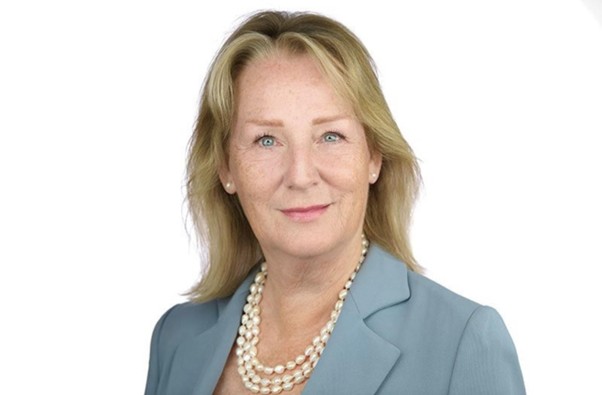
AUTHOR
By Professor Charlotte Valeur, Chair & Founder of ION Global
Charlotte is an investment banker, FTSE Chair, published author and professor in governance with a wealth of board experience across many industries and sectors.
A lifelong human rights advocate, Charlotte is driven to play her part in creating an inclusive society, advocating for equality and inclusion for all. To this effect she also founded the global Institute of Neurodiversity ION in 2020.
