
Using My Experience to Help & Educate Others
by Céline Averty
I am often asked by people about my experience of a late ADHD diagnosis; I will try to explain briefly and take the highway instead of the small country roads. Straight to the point!
When I take a step back, it seems kind of funny to see that I have a pretty normal and typical combined ADHD profile, for a kid and woman who has been considered a mystery her whole life. Being diagnosed at 30 years old and having to deconstruct a set of beliefs and myths around a poorly known condition at the time, mostly recognised in little boys. I’ve come to the place where I am telling myself, ”Ok, that wasn’t my fault”, forgiving others, but also my dear self.
We are legitimate to be angry for being told we were lazy, disorganised, rude and that we were not willing enough. We seemed to fail so many times, and instead of being cheered up, we got told “I don’t understand, you have everything you need, but you are ruining it”.
I went through “the gifted child” to “the burden of the family”. I learnt to forgive myself for feeling guilty when I seemed to fail in what others planned for me, and putting what I truly wanted aside, because my goals were too big and unreachable.
For me, I’ve not only had to professionally retrain but also life retrain: We are constantly learning to accept who we are and how we work, what we want and how to rebuild ourselves and our futures . At this point of my life, i asked myself “What do i want to do now?” and decided to just start again from where I stopped believing I could do it.
If I could give any advice to someone with a late ADHD diagnosis, this would be: you can be frustrated, but you have to move on. You might have gotten into trouble for things that actually were symptoms and can’t change the past, but we can help people to understand what it is, how to adapt, manage it and/or live with it. I’ve been frustrated for years, because of the lack of knowledge of the doctors and by the school who discredited me and made me give up on my dreams; But those people are living their life and will never know that I have ADHD now, so you should do the same and live for you.
If you want to get help, find the right one for you; if you want to do it by yourself, you are absolutely capable of it! We are naturally resilient because of all the challenges we’ve been through and I can tell you that what you think is impossible is actually reachable.
As individuals, we are all different: One ADHD person with a unique personality so one way of healing doesn’t exist.
So, what now? I decided to use my years of medical wandering and experiences of medical mistakes within an environment that misled me to help people I thought I would never forgive, by educating the medical world. I’ve struggled for years with the mental comorbidity with the higher mortality rates, related to my ADHD. During all those years of being inpatient, I witnessed the lack of psychiatrists in psychiatric units, overworked nurses and caregivers, health managers who were not educated in the health system, and psychiatrists who were not seeing their patients and wrongly diagnosing them (as a reminder, pharmaceutical treatments have strong side effects especially if they are given to a misdiagnosed patient).
Hospitals need help to be educated because psychiatric units are full of neurominorities diagnosed with or BPD bipolar disorders. We can help and raise the awareness. The mental comorbidity seen in those units can be the signs of potential neurological conditions. Working hand in hand, we can help patients, their surroundings but also medical teams.
We can also educate corporations and companies, so they can adapt their structures for the well-being of neurominorities. It will help individuals to blossom, use their full potential and become integrated. Employees and parents might recognised some symptoms in their children.
We have to do everything we can to deconstruct all the myths. Having a neurological condition is not a manufacturing defect, an illness, it’s not a look, it is not a mind, and has different spectrums.
Helping neurominorities and educating the world around them remains close-to-my-heart, especially now that I know how my ADHD works and how I manage it. But just helping ourselves is not enough, when an environment is not adapted.
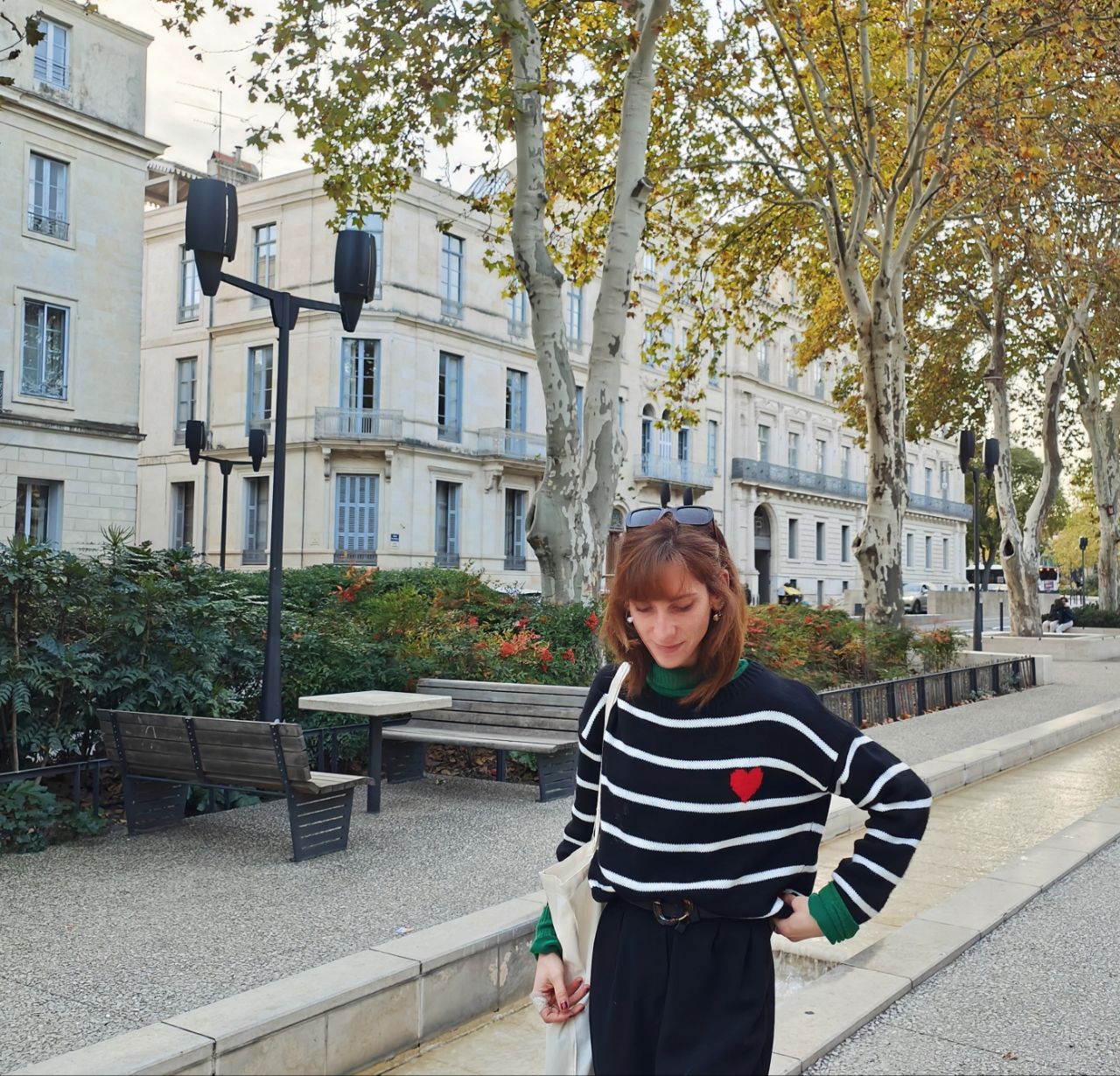
Céline Averty, ION France Membre du Bureau Trésorier.