
For many adults, particularly those without obvious co-occurring conditions, the absence of a diagnosis creates a dangerous illusion: that nothing is different enough to matter.
But that assumption doesn’t hold up over time.
People who have spent decades masking, adapting, and coping without recognition of their neurotype often reach later life with:
- chronic stress and burnout
- misinterpreted behaviours
- heightened sensory sensitivities
- difficulty navigating increasingly complex systems (healthcare, legal, social care)
Without a diagnosis, these are rarely understood in context. They are labelled and labels, when wrong, lead to harm.
What Are We Actually Diagnosing?
This is where clarity matters.
1. Neurotype vs. Co-occurring Conditions
A diagnosis of neurodivergence (e.g. Autism Spectrum Disorder, Attention-Deficit/Hyperactivity Disorder) is not the same as diagnosing:
- anxiety
- depression
- personality disorders
- cognitive decline
Those may exist but they are not the root.
A neurotype diagnosis answers:
How does this person naturally think, process, feel, and respond to the world?
Co-occurring diagnoses answer:
What additional challenges or conditions are present?
Too often, in the absence of a neurotype diagnosis, the system defaults to the second and gets it wrong.
The Cost of Late or Missed Diagnosis
When neurotype is not recognised early, people build lives around coping, not alignment. That works, until it doesn’t.
In midlife and beyond, you often see:
- increased burnout or “sudden” mental health crises
- breakdown of coping strategies
- misdiagnosis (e.g. being labelled difficult, resistant, or disordered)
- inappropriate treatments or interventions
And then comes the real risk:
Ageing, Cognitive Decline, and Misinterpretation
As people age, natural changes, such as memory decline or neurological conditions like Dementia, begin to interact with lifelong neurodifferences.
Without a prior understanding of neurotype:
- sensory overwhelm may be mistaken for agitation
- communication differences may be seen as confusion or non-compliance
- need for routine may be labelled rigidity or decline
- shutdowns or meltdowns may be treated as behavioural issues
This is where institutional risk escalates, not because people are intentionally harmful but because they are operating with the wrong framework.
Institutional Abuse Is Often System Failure
Let’s be blunt: much of what is called “institutional abuse” is not always malicious, it is often systemic misunderstanding at scale.
For neurominority individuals without diagnosis:
- restraints may be used unnecessarily
- medication may be overprescribed
- autonomy may be removed
- distress signals may be ignored or misread
A diagnosis does not eliminate these risks but it changes the starting point.
It provides:
- a documented explanation of difference
- a basis for reasonable adjustments
- a legal and ethical anchor for care decisions
- a way for advocates and families to challenge inappropriate treatment
The Critical Point Most People Miss
This isn’t just about those who are already neurominorities, it is about all of us.
At any point in life, through:
- accident
- illness
- trauma
- neurological change
any person can acquire mental or physical disabilities.
When that happens, systems fall back on what they already know about you. If your baseline neurotype is undocumented, your behaviours may be interpreted through the wrong lens.
Diagnosis as Protection, Not Pathology
We need to reframe diagnosis entirely.
It is not about deficit, it is about context.
A diagnosis says:
- this person processes the world in a specific way
- their sensory, cognitive, and emotional responses follow a pattern
- support should be adapted accordingly
Without that, people are forced into a “modelled human” standard that doesn’t exist and are judged against it.
Why Late Diagnosis Still Matters
Even in later life, diagnosis can:
- reframe a lifetime of misunderstood experiences
- reduce inappropriate psychiatric labelling
- inform personalised healthcare and support
- protect against misinterpretation in care environments
- give families and advocates a tool to ensure dignity
It is not too late, in fact, it may be most critical when vulnerability increases.
The Bottom Line
If you strip this back, the issue is simple:
Systems treat what they can recognise.
If neurotype is invisible, it is ignored.
If it is ignored, it is misinterpreted.
If it is misinterpreted, people get hurt.
Diagnosis, done properly, is not about putting people in boxes. It is about ensuring they are not forced into the wrong one.
AUTHOR
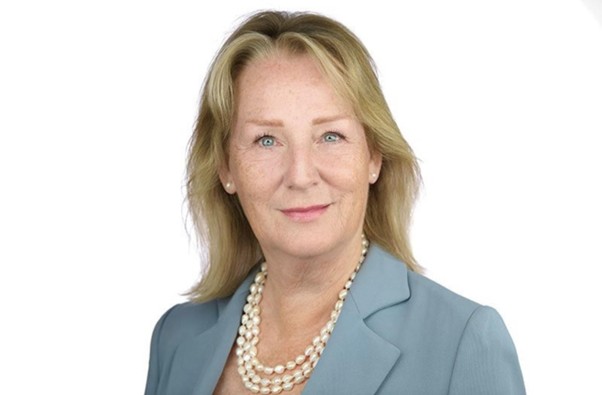
Professor Charlotte Valeur, Chair & Founder of ION Global
Charlotte is an investment banker, FTSE Chair, published author and professor in governance with a wealth of board experience across many industries and sectors.
A lifelong human rights advocate, Charlotte is driven to play her part in creating an inclusive society, advocating for equality and inclusion for all. To this effect she also founded the global Institute of Neurodiversity ION in 2020.