
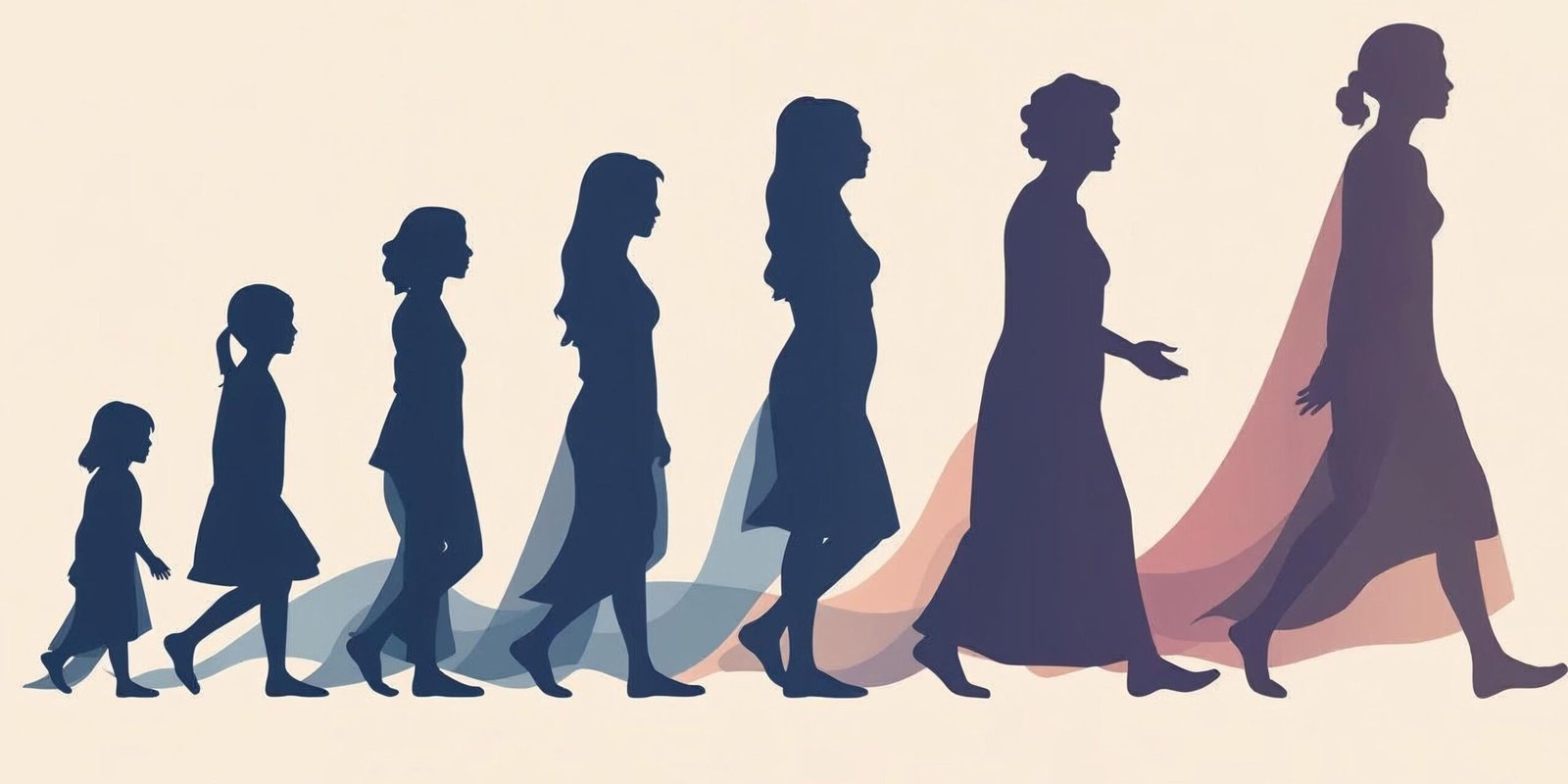
Why changing behaviour does not necessarily mean changing who we are.
A mother recently asked an online parenting group whether her five-year-old son might have been misdiagnosed as autistic at two and a half. He had developed considerably, many of the behaviours that originally concerned her had diminished, and a more structured learning environment seemed to be working well for him.
Perhaps, she wondered, he had grown out of autism. Perhaps he had ADHD instead.
The responses were revealing. Some suggested he might have both. Others warned that his autism might become more apparent again when he encountered greater demands. Some suggested that his improved behaviour was evidence that the support he had received was working.
But the conversation raises a much bigger question.
Why do we interpret developmental progress in people of minority neurotypes as evidence that they are becoming more neurotypical?
And why do we so rarely question the assumptions about human development that sit behind that interpretation?
We all grow out of being children
Think about how you behaved at five years old.
Your emotional regulation, attention, communication, understanding of social expectations, ability to manage uncertainty and capacity to organise yourself were all different from what they are today.
We learned, developed, our brain matured and our experiences shaped us. Nobody would suggest that a neurotypical child who develops greater emotional regulation has grown out of being neurotypical. We simply recognise that they have grown up.
Yet when an autistic child becomes more comfortable socially, when a child with ADHD develops strategies for managing attention, or when a dyslexic child learns to read fluently, we sometimes interpret that progress as evidence that their underlying neurotype has disappeared.
Why?
We appear to confuse the development of capabilities with the disappearance of neurological differences.
These are not the same thing.
Our behaviours change. Our neurodevelopmental histories do not disappear.
Autism, ADHD and dyslexia are associated with differences in neurotypes, sensory and cognitive processing. They are not simply collections of childhood behaviours. Of course, the way these characteristics are expressed can change considerably over a lifetime.
An autistic child who finds transitions overwhelming may become an adult who plans transitions carefully and navigates them successfully.
A child with ADHD who struggles to remain seated may become an adult whose need for movement is expressed through an active career or frequent changes of activity.
A dyslexic child who struggles with reading may become an accomplished writer, having developed effective ways to work with language.
None of these developments necessarily means that the underlying differences have disappeared. They may mean that the person has acquired knowledge, developed skills, found strategies or discovered environments that work better for them. They may also reflect genuine developmental changes in the underlying cognitive characteristics themselves.
Human neurodevelopment is not static. The brain continues to develop and adapt throughout life but development is not the same as becoming neurotypical.
What does the research actually tell us?
Research broadly supports the distinction between developmental change and diagnostic persistence, although the evidence is more complex than simply declaring that nobody ever grows out of a diagnosis.
A systematic review of preschool autism diagnoses found that approximately nine in ten children continued to meet diagnostic criteria at follow-up. The researchers could not determine whether those who no longer met the criteria had experienced developmental changes, benefited from intervention or had originally been misdiagnosed.
This however should be considered within the group of people being diagnosed when young, some of us didn’t get diagnosed till adults for a variety of reasons.
Longitudinal autism research also demonstrates considerable variation in how autistic characteristics are expressed over time. For some individuals, measured difficulties decrease. For others, they remain relatively stable or change across different developmental stages.
ADHD research provides another important insight. A longitudinal study following 558 children with ADHD into young adulthood found that only 9.1% demonstrated sustained remission by the end of the study. Most experienced fluctuating periods in which ADHD-related difficulties became more or less apparent.
Dyslexia research similarly distinguishes between the development of reading competence and the persistence of underlying processing differences. Some adults become highly competent readers while continuing to demonstrate differences in phonological processing or reading fluency.
The research does not prove that an individual’s neurological profile is immutable. Nor does it mean that every childhood diagnosis is necessarily correct. It does, however, challenge the assumption that the disappearance of observable difficulties demonstrates the disappearance of an underlying neurodevelopmental difference.
Not meeting diagnostic criteria at a particular point in life is not necessarily the same as becoming neurotypical, in fact what we hear from neurominority individuals around the world is that they are still the same.
Perhaps the environment has changed, not the person
Consider two environments.
In the first, a child experiences unpredictable routines, constant sensory stimulation, unclear expectations, frequent transitions and pressure to behave in ways that do not come naturally.
In the second, the same child experiences predictable routines, clear communication, opportunities to regulate sensory input, appropriate autonomy and adults who understand their needs.
The child’s outward behaviour may be dramatically different.
But what exactly has changed?
Has the child become less autistic?
Or has the environment become more compatible with how that child experiences and processes the world?
This distinction matters enormously. We frequently describe behaviour as though it exists independently of the circumstances in which it occurs. Yet behaviour emerges through the interaction between the person and their environment.
When environments create unnecessary friction, differences may become more visible through distress, withdrawal, frustration, exhaustion or difficulty meeting expectations.
When environments are accessible and psychologically safe, those same differences may create little observable difficulty. The person has not necessarily changed their neurotype.
We may simply have stopped placing obstacles between the person and their ability to function and flourish.
Psychological safety changes what others see
There is another dimension to this.
When people feel psychologically safe, they may no longer need to devote so much energy to monitoring their behaviour, anticipating criticism or trying to meet expectations designed around other people’s ways of thinking. They can direct more of their attention towards learning, relationships, creativity and participation.
For some people of minority neurotypes, this means their differences become less noticeable. For others, psychological safety means they feel sufficiently comfortable to express differences they previously concealed. Both outcomes can be positive.
This is why we should be cautious about using outwardly neurotypical behaviour as a measure of success. Someone who appears comfortable may be masking considerable internal effort and others who behave visibly differently may be entirely comfortable and functioning well.
We cannot reliably infer a person’s internal experience from how closely their behaviour resembles that of the “typical” human.
What happens when our ability to adapt changes?
There is another important dimension to this conversation: what happens as we grow older, experience illness, have an accident or encounter other changes that affect our abilities?
Throughout our lives, we develop ways of navigating the world. We learn strategies, establish routines, develop capabilities and sometimes become extraordinarily skilled at compensating for environments that do not naturally work for us. Over time, those strategies may become so effective that other people no longer notice our underlying differences. Sometimes we barely notice the effort ourselves.
But what happens when our circumstances change?
What happens when we age and our cognitive resources change? When we experience a brain injury, illness, menopause, prolonged stress or simply no longer have the energy to maintain the adaptations we have developed over decades? The characteristics that appeared to have disappeared may become more visible again.
Not necessarily because our neurotype has changed, but because our capacity to compensate, adapt or manage our environment has changed.
An autistic person who has spent decades successfully navigating complex social environments may find that the same interactions become exhausting later in life.
Someone with ADHD who developed effective organisational strategies may find those strategies harder to maintain following illness or cognitive changes.
A dyslexic person who has developed sophisticated ways of processing written information may find that fatigue or changes in working memory make previously manageable tasks difficult again.
Of course, ageing and illness affect people of every neurotype. Nor should every new difficulty be attributed to an existing neurodevelopmental difference. New symptoms may require medical investigation but there is a significant implication here.
What looks like growing out of a neurotype during childhood may sometimes be the development of capabilities that make its characteristics less visible. And what looks like the return of those characteristics later in life may reflect changes in the capacity to use those capabilities.
This challenges the assumption that outward behaviour provides a reliable measure of underlying neurological characteristics. It also challenges the idea that someone who has functioned independently for decades cannot suddenly need support. Their needs may have changed. Their environment may have changed. Their capacity to compensate may have changed. None of those changes invalidates who they have always been.
Perhaps we should stop thinking about neurodevelopment as a journey towards normality and start understanding it as a lifelong interaction between neurological characteristics, developing capabilities, environmental demands and available support.
We do not simply grow out of differences and challenges. We develop ways of navigating them and sometimes, as life changes, those ways need to change too.
What exactly are we calling normal?
There is a deeper assumption worth challenging. When we say that a child has become more normal, what are we measuring?
Usually, we are comparing their behaviour with expectations based on what is common, conventional or socially preferred but normality is not a fixed neurological destination. It is partly a statistical description and partly a collection of social expectations that vary across cultures, environments and historical periods.
A child who struggles to sit quietly for six hours may be described as having behavioural difficulties in one educational environment and thrive in another that allows movement and active learning.
An autistic adult who finds unstructured social interaction exhausting may struggle in an organisation built around constant networking but excel in one that values clear communication and focused work.
A dyslexic person may struggle in a workplace that equates competence with rapid written processing but perform exceptionally well when information is accessible in different formats.
These examples do not mean that all difficulties are created by the environment. Some neurological differences create substantial support needs across many settings but they demonstrate that the visibility and impact of a difference are not determined by neurotype alone.
The boundaries of normality often tell us as much about the systems we have designed as they do about the people being assessed.
Development should not be confused with conformity
There is a risk in celebrating children because they appear less autistic, less ADHD, less dyslexic etc, as they mature.
We may unintentionally teach them that progress means becoming less like themselves. That successful development means hiding differences and that acceptance is conditional upon appearing sufficiently similar to everybody else. Instead, we should be asking whether children are developing the capabilities they need to live fulfilling lives.
Can they communicate their needs?
Can they understand and navigate their environments?
Can they build relationships that matter to them?
Can they exercise agency and make choices?
Can they learn, participate and pursue their interests?
Can they recognise when they need support and feel safe asking for it?
These are meaningful developmental outcomes and they matter for children of every neurotype. The goal should never be conformity for its own sake rather it should be increasing capability, autonomy, wellbeing and opportunity.
What if a diagnosis genuinely changes?
We should also acknowledge that diagnoses are not infallible. Young children develop rapidly. Diagnostic assessments involve professional judgement, and different conditions can have overlapping presentations.
Autism and ADHD can coexist. A child can also be incorrectly diagnosed, or their developmental profile may become clearer with age. Reassessment can therefore be appropriate but the purpose should be to understand the child more accurately, not to demonstrate that they have become “normal”.
We should certainly be careful not to remove useful support simply because a child is progressing. Indeed, progress may be evidence that the support and environment are effective. Removing that support and then observing renewed difficulties does not establish that the child has regressed. It may simply demonstrate that the conditions enabling them to flourish have been withdrawn.
We should celebrate development without celebrating the disappearance of difference
Perhaps we need to change the conversation altogether.
Instead of asking whether children are growing out of autism, ADHD, dyslexia or another minority neurotype, perhaps we should ask what they are growing into.
What capabilities are they developing?
What have they learned about themselves?
What environments enable them to thrive?
What support do they need now, rather than what they needed three years ago?
And how can we ensure that their development is measured against their own opportunities and aspirations rather than their proximity to an imagined standard human?
We should celebrate children who develop new skills, become more confident, experience less distress and gain greater independence.
We should celebrate adults who learn to understand themselves and shape their lives around their strengths and needs.
But we should not automatically interpret those achievements as evidence that neurological difference has disappeared.
We grow out of being children. We do not have to grow out of being ourselves.
And perhaps the greatest progress occurs when a person no longer needs to appear “normal” to function as an equal citizen.