
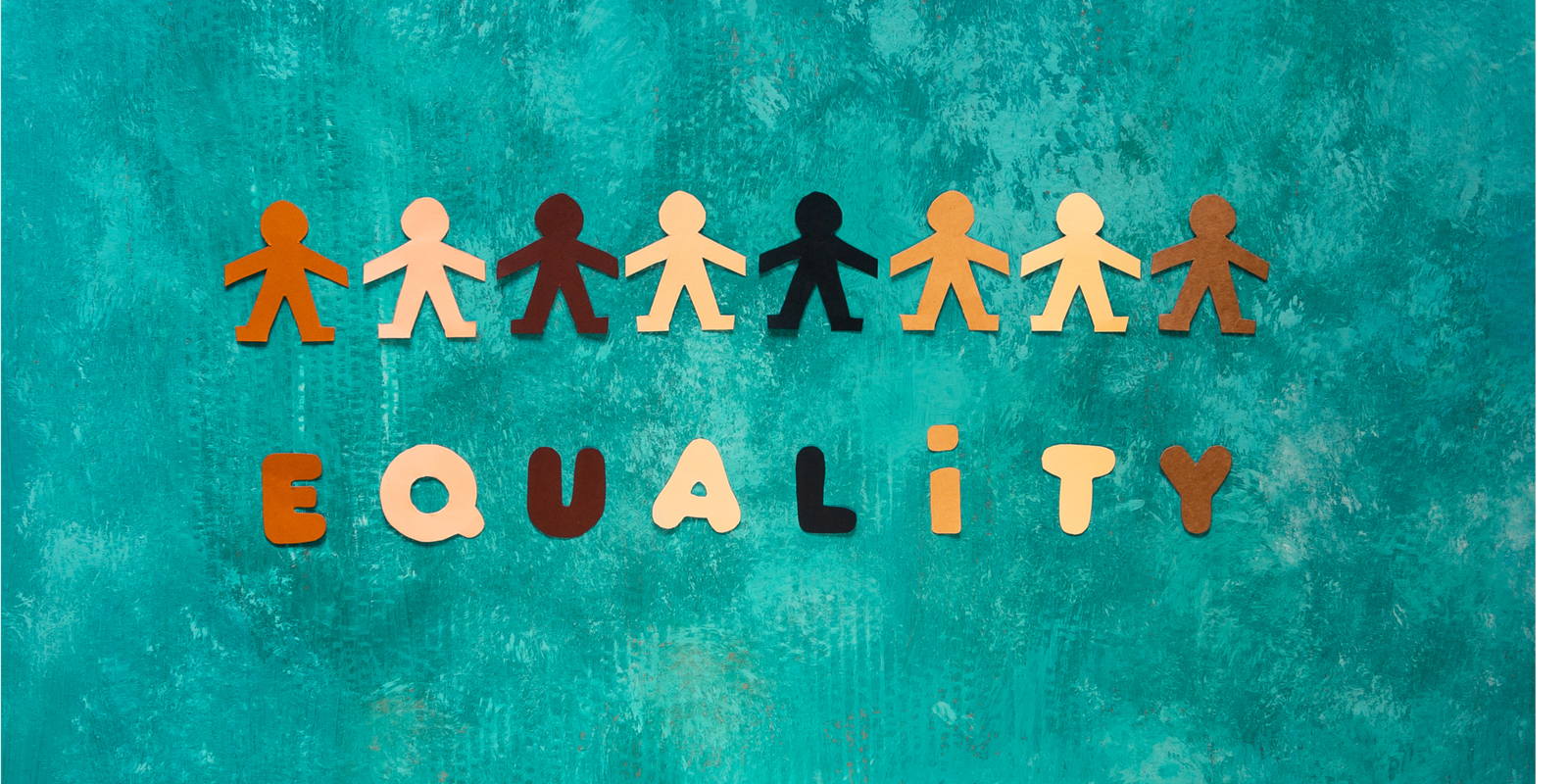
Why neuroequality must take its place alongside other equality and human rights movements
For decades, societies have worked to recognise and address inequalities based on gender, ethnicity, sexual orientation, disability and other human characteristics. Progress has been uneven and remains incomplete, but one important development has been the creation of language, rights frameworks and tools that make discrimination identifiable, discussable and challengeable.
We recognise sexism, racism, homophobia and ableism. These words help us identify patterns of discrimination that might otherwise be dismissed as individual experiences, misunderstandings or simply the way things are.
Yet discrimination based on neurotype remains comparatively poorly recognised.
People of minority neurotypes experience barriers in education, employment, healthcare, public services and everyday social participation. We may be excluded because of how we communicate, learn, process information, behave or experience our environments.
Too often, these experiences are interpreted through the characteristics of the individual rather than the design of the systems around them.
The world has spent a great deal of time asking what is different about minority neurotypes. We have spent far less time asking what is unequal about the societies in which we live.
That is the Neurodiversity Gap.
From a medical conversation to an equality conversation
Much of the public understanding of neurodiversity has developed through medical, psychological and diagnostic frameworks. Research has examined neurological differences, identified conditions, categorised behaviours and investigated treatments and interventions.
This work has value. Diagnosis, healthcare, appropriate support and scientific understanding can be important to individuals and families.
But medicine cannot be the only framework through which society understands neurological variation. When neurodiversity is approached primarily as a medical issue, the central questions tend to concern the individual:
What condition do we have? How does it affect us? What support or intervention do we require? How can we adapt?
A rights and equality approach asks different questions.
Why are particular ways of thinking, communicating and behaving treated as the standard against which everyone else is measured?
Who designed our educational, employment and social systems? Whose needs were considered? Whose were overlooked?
What happens when institutions expect people to adapt to systems that were never designed to accommodate the full range of human variation?
And who should be accountable when those systems produce exclusion?
The shift is not from medicine being important to medicine being irrelevant. It is from being defined primarily by others to having agency over our own lives, experiences and rights.
Why language matters: Neuroism and neuroist discrimination
Equality movements have demonstrated the importance of having language to identify discrimination. Without language, harmful experiences can remain isolated and difficult to explain.
A woman repeatedly overlooked for promotion may be told she lacks confidence. A person experiencing racial discrimination may be told they are not the right cultural fit. An LGBTQ+ person may be expected to conceal part of their identity to be accepted. Recognising sexism, racism and homophobia allow these experiences to be examined as potential patterns of discrimination rather than simply personal shortcomings.
The neurodiversity movement needs an equally accessible vocabulary. ION promotes the terms neuroism and neuroist to help identify prejudice, discrimination and systemic disadvantage based on neurotype.
Neuroism can describe assumptions that particular neurological characteristics, communication styles, cognitive processes or behaviours are inherently more acceptable, capable or valuable than others.
Neuroist discrimination can occur through individual behaviour, institutional practices or systems that consistently disadvantage minority neurotypes.
Consider an employer who equates eye contact with honesty, spontaneous verbal responses with intelligence, or sociability with leadership potential. These assumptions may appear neutral. They may even be regarded as common sense. But they can systematically favour people whose neurological characteristics align with those expectations.
Similarly, an education system that recognises only a narrow range of learning and assessment methods may disadvantage students whose abilities are not adequately demonstrated through those methods.
A healthcare system that assumes everyone can communicate symptoms, tolerate environments or navigate appointments in the same way may unintentionally exclude those who cannot.
These are not necessarily examples of deliberate hostility. They may reflect institutional assumptions that have never been questioned.
Discrimination does not have to be intentional to have discriminatory consequences.
Giving these patterns a name makes them easier to recognise, investigate and challenge. The terms neuroism and neuroist are intended to contribute to that process. Like other equality concepts, their definitions and applications must be developed carefully, with attention to evidence, context and the experiences of those affected.
Neuroequality belongs alongside other equality and human rights movements
The neurodiversity movement is not separate from wider struggles for equality and human rights; it is part of them.
Women, people from minority ethnic backgrounds, LGBTQ+ people, disabled people and other groups have challenged systems that treated the characteristics of dominant groups as the norm. Their movements have demonstrated that exclusion is often embedded in apparently ordinary institutional practices.
The neurodiversity movement raises a related question:
What happens when the assumed human being around whom society is organised is also neurologically narrow?
Our schools, workplaces, healthcare systems, public services and governance structures frequently rely on expectations about communication, attention, sensory processing, social interaction and behaviour. These expectations are not always appropriate for everyone.
Nor are neurominorities a single homogeneous group. Different neurotypes, and individuals within us, can experience very different barriers and require different conditions to participate equally. Neuroequality must therefore recognise both shared rights and individual variation.
It must also recognise intersectionality. A person may experience neuroist discrimination alongside racism, sexism, homophobia, ableism or other forms of disadvantage. These experiences should not be forced into competing categories.
The purpose is to understand how different forms of inequality interact and how systems can be designed to address them.
From being researched to defining the questions
For too long, much of the narrative about minority neurotypes has been shaped by professionals, institutions and researchers speaking about us rather than working with us as equal participants. The questions asked, the outcomes measured and the definitions of success have not always reflected the priorities of us, the people concerned.
Research about neurominorities remains important, but research should not substitute for our agency. We must be able to define what matters to us, participate in decisions affecting our lives and judge whether interventions and institutional changes produce outcomes we value.
This requires more than consultation, it requires recognising minority neurotypes as rights-holders, decision-makers, contributors and authorities on their own experiences.
The Neurodiversity Gap: A practical tool for equality
Making the invisible visible
The history of equality movements demonstrates that change requires more than goodwill, it requires the ability to recognise discrimination, describe it, question the assumptions behind it and hold institutions accountable for their practices.
Language matters because it changes what society is able to see. Measurement matters because it helps us identify the distance between our stated principles and our experiences. Agency matters because equality cannot be defined solely by those who hold institutional power.
The Neurodiversity Gap brings these ideas together.
It does not ask us to prove that our differences are valuable enough to deserve inclusion, it begins from the principle that people of all neurotypes are entitled to equal rights, dignity, opportunity and participation. The question is whether the systems around us make those rights and opportunities real.
We do not need another generation of people being told that the problem lies primarily in how their minds work. We need to examine the systems that decide which minds and ways of functioning are accommodated, which are disadvantaged and whose experiences count.
Neuroequality is not about asking society to accommodate out differences as an act of kindness, It is about recognising that people of all neurotypes have the same fundamental rights to equality, dignity, opportunity and participation.
Just as other equality movements have challenged the assumptions, prejudices, and systems that have excluded them, the neurodiversity movement must make neuroism visible, challenge the inequalities it creates and claim its rightful place within the global equality and human rights movement.
Find links to detailed description and an assessment tool below to download
Institute of Neurodiversity (ION): Why neuroequality must take its place alongside other equality and human rights movements
For decades, societies have worked to recognise and address inequalities based on gender, ethnicity, sexual orientation, disability and other human characteristics. Progress has been uneven and remains incomplete, but one important development has been the creation of language, rights frameworks and tools that make discrimination identifiable, discussable and challengeable.
We recognise sexism, racism, homophobia and ableism. These words help us identify patterns of discrimination that might otherwise be dismissed as individual experiences, misunderstandings or simply the way things are.
Yet discrimination based on neurotype remains comparatively poorly recognised.
People of minority neurotypes experience barriers in education, employment, healthcare, public services and everyday social participation. We may be excluded because of how we communicate, learn, process information, behave or experience our environments.
Too often, these experiences are interpreted through the characteristics of the individual rather than the design of the systems around them.
The world has spent a great deal of time asking what is different about minority neurotypes. We have spent far less time asking what is unequal about the societies in which we live.
That is the Neurodiversity Gap.
From a medical conversation to an equality conversation
Much of the public understanding of neurodiversity has developed through medical, psychological and diagnostic frameworks. Research has examined neurological differences, identified conditions, categorised behaviours and investigated treatments and interventions.
This work has value. Diagnosis, healthcare, appropriate support and scientific understanding can be important to individuals and families.
But medicine cannot be the only framework through which society understands neurological variation. When neurodiversity is approached primarily as a medical issue, the central questions tend to concern the individual:
What condition do we have? How does it affect us? What support or intervention do we require? How can we adapt?
A rights and equality approach asks different questions.
Why are particular ways of thinking, communicating and behaving treated as the standard against which everyone else is measured?
Who designed our educational, employment and social systems? Whose needs were considered? Whose were overlooked?
What happens when institutions expect people to adapt to systems that were never designed to accommodate the full range of human variation?
And who should be accountable when those systems produce exclusion?
The shift is not from medicine being important to medicine being irrelevant. It is from being defined primarily by others to having agency over our own lives, experiences and rights.
Why language matters: Neuroism and neuroist discrimination
Equality movements have demonstrated the importance of having language to identify discrimination. Without language, harmful experiences can remain isolated and difficult to explain.
A woman repeatedly overlooked for promotion may be told she lacks confidence. A person experiencing racial discrimination may be told they are not the right cultural fit. An LGBTQ+ person may be expected to conceal part of their identity to be accepted. Recognising sexism, racism and homophobia allow these experiences to be examined as potential patterns of discrimination rather than simply personal shortcomings.
The neurodiversity movement needs an equally accessible vocabulary. ION promotes the terms neuroism and neuroist to help identify prejudice, discrimination and systemic disadvantage based on neurotype.
Neuroism can describe assumptions that particular neurological characteristics, communication styles, cognitive processes or behaviours are inherently more acceptable, capable or valuable than others.
Neuroist discrimination can occur through individual behaviour, institutional practices or systems that consistently disadvantage minority neurotypes.
Consider an employer who equates eye contact with honesty, spontaneous verbal responses with intelligence, or sociability with leadership potential. These assumptions may appear neutral. They may even be regarded as common sense. But they can systematically favour people whose neurological characteristics align with those expectations.
Similarly, an education system that recognises only a narrow range of learning and assessment methods may disadvantage students whose abilities are not adequately demonstrated through those methods.
A healthcare system that assumes everyone can communicate symptoms, tolerate environments or navigate appointments in the same way may unintentionally exclude those who cannot.
These are not necessarily examples of deliberate hostility. They may reflect institutional assumptions that have never been questioned.
Discrimination does not have to be intentional to have discriminatory consequences.
Giving these patterns a name makes them easier to recognise, investigate and challenge. The terms neuroism and neuroist are intended to contribute to that process. Like other equality concepts, their definitions and applications must be developed carefully, with attention to evidence, context and the experiences of those affected.
Neuroequality belongs alongside other equality and human rights movements
The neurodiversity movement is not separate from wider struggles for equality and human rights; it is part of them.
Women, people from minority ethnic backgrounds, LGBTQ+ people, disabled people and other groups have challenged systems that treated the characteristics of dominant groups as the norm. Their movements have demonstrated that exclusion is often embedded in apparently ordinary institutional practices.
The neurodiversity movement raises a related question:
What happens when the assumed human being around whom society is organised is also neurologically narrow?
Our schools, workplaces, healthcare systems, public services and governance structures frequently rely on expectations about communication, attention, sensory processing, social interaction and behaviour. These expectations are not always appropriate for everyone.
Nor are neurominorities a single homogeneous group. Different neurotypes, and individuals within us, can experience very different barriers and require different conditions to participate equally. Neuroequality must therefore recognise both shared rights and individual variation.
It must also recognise intersectionality. A person may experience neuroist discrimination alongside racism, sexism, homophobia, ableism or other forms of disadvantage. These experiences should not be forced into competing categories.
The purpose is to understand how different forms of inequality interact and how systems can be designed to address them.
From being researched to defining the questions
For too long, much of the narrative about minority neurotypes has been shaped by professionals, institutions and researchers speaking about us rather than working with us as equal participants. The questions asked, the outcomes measured and the definitions of success have not always reflected the priorities of us, the people concerned.
Research about neurominorities remains important, but research should not substitute for our agency. We must be able to define what matters to us, participate in decisions affecting our lives and judge whether interventions and institutional changes produce outcomes we value.
This requires more than consultation, it requires recognising minority neurotypes as rights-holders, decision-makers, contributors and authorities on their own experiences.
The Neurodiversity Gap: A practical tool for equality
Making the invisible visible
The history of equality movements demonstrates that change requires more than goodwill, it requires the ability to recognise discrimination, describe it, question the assumptions behind it and hold institutions accountable for their practices.
Language matters because it changes what society is able to see. Measurement matters because it helps us identify the distance between our stated principles and our experiences. Agency matters because equality cannot be defined solely by those who hold institutional power.
The Neurodiversity Gap brings these ideas together.
It does not ask us to prove that our differences are valuable enough to deserve inclusion, it begins from the principle that people of all neurotypes are entitled to equal rights, dignity, opportunity and participation. The question is whether the systems around us make those rights and opportunities real.
We do not need another generation of people being told that the problem lies primarily in how their minds work. We need to examine the systems that decide which minds and ways of functioning are accommodated, which are disadvantaged and whose experiences count.
Neuroequality is not about asking society to accommodate out differences as an act of kindness, It is about recognising that people of all neurotypes have the same fundamental rights to equality, dignity, opportunity and participation.
Just as other equality movements have challenged the assumptions, prejudices, and systems that have excluded them, the neurodiversity movement must make neuroism visible, challenge the inequalities it creates and claim its rightful place within the global equality and human rights movement.
Find links to detailed description and an assessment tool here
Institute of Neurodiversity (ION): Empowering people of all neurotypes to prosper equally..