
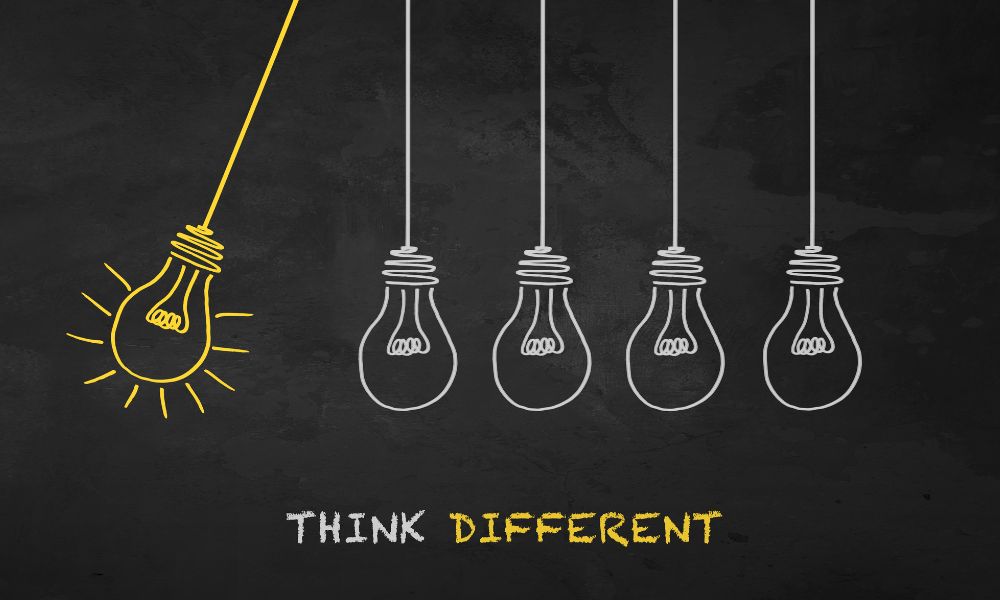
Many neurominority people spend their lives being told they are:
- too direct,
- too intense,
- too sensitive,
- too honest,
- too questioning,
- or “not political enough.”
Yet in organisational systems, these same traits can function as something critically important…
an early warning system for cultural drift.
Across workplaces, institutions, and leadership structures, many neurominority individuals notice misalignment early.
They notice the gap between:
- stated values and lived behaviour,
- inclusion language and exclusion practices,
- leadership messaging and operational reality,
- psychological safety and silent fear.
Not because neurominority people are morally superior or because all neurominority people think alike. But because many minority neurotypes experience social systems differently.
Some are:
- less driven by hierarchy-preservation,
- less comfortable with hidden rules,
- less soothed by social consensus,
- and more internally compelled toward coherence, fairness, accuracy, or authenticity.
This can make organisational contradiction deeply uncomfortable.
Where others may unconsciously adapt to inconsistency as “normal workplace politics,” some neurominority individuals experience genuine cognitive and emotional friction. They may struggle to ignore:
- hypocrisy,
- unfairness,
- performative inclusion,
- bullying hidden behind status,
- or systems that say one thing while rewarding another.
As a result, they often raise concerns earlier than others and this is where organisations face a critical choice.
Do they listen to the signal?
Or do they pathologise the messenger?
This is something I have repeatedly witnessed when working with organisations on governance.
Too often, the person identifying the cultural problem becomes framed as the problem themselves:
- “difficult,”
- “negative,”
- “too emotional,”
- “not collaborative,”
- or “lacking fit.”
Meanwhile, the underlying issue continues growing quietly beneath the surface.
This is why one of my key recommendations to boards and executives, is to move towards what feels difficult as supposed to moving away, minimising, ignoring or removing the person pointing out concerns. Those employees are often the earliest detectors of cultural drift, ethical inconsistency, and emerging organisational dysfunction
When I observe organisations that move away from hearing the uncomfortable truth, it is a red flag that all is not right.
This pattern matters because organisations that suppress cognitively different perspectives often lose access to uncomfortable reality. When organisations lose access to reality, they lose their ability to self-correct.
This is one strong reason neuroinclusion is not simply a wellbeing issue. It is a governance, leadership, innovation, and risk issue.
Neurominority minds frequently detect:
- hidden tension,
- ethical inconsistency,
- operational incoherence,
- social exclusion,
- systemic unfairness,
- and emerging toxicity
before these become visible in dashboards or board papers. That does not mean every concern raised is automatically correct. No human being is infallible.
Psychologically safe organisations understand something important, that truthful challenge is an asset, not a threat.
The future of healthy organisations will not belong to systems that demand conformity at all costs. It will belong to systems capable of hearing uncomfortable truths before those truths become crises.
And that requires environments where different kinds of minds are not merely tolerated but recognised for the value they bring to collective human systems.
Sometimes the people called “too sensitive/difficult/direct/honest etc” are simply the first to feel the fractures in the culture.
So what should organisations do?
Organisations that want to fully utilise human talent and detect cultural derailment early must stop treating discomfort as dysfunction.
The goal of healthy organisational culture is not harmony at all costs, it is the ability to surface reality early enough to self-correct.
That requires leaders, boards, and managers to deliberately build systems that can hear difficult truths without punishing the people who raise them.
1. Stop Rewarding Performative Alignment
Many organisations unconsciously reward:
- social smoothness over honesty,
- political navigation over clarity,
- agreement over challenge,
- and emotional comfort over operational truth.
This creates cultures where people learn to stay silent. The result is delayed dysfunction and instability. Healthy organisations distinguish between:
- destructive behaviour,
- and uncomfortable truth-telling.
Those are not the same thing. A person who raises difficult concerns may not always communicate perfectly. But organisations must learn to assess the signal underneath the delivery. Otherwise, they risk filtering out the very people most capable of identifying emerging cultural, ethical, operational, or leadership failures.
2. Treat Cognitive Difference as a Strategic Asset
Neuroinclusion should not sit only within HR or wellbeing functions, it should be understood as:
- a governance issue,
- a leadership capability issue,
- a risk-management issue,
- an innovation issue,
- and a systems-design issue.
People of minority neurotypes often process:
- power dynamics,
- inconsistency,
- social exclusion,
- ethical contradiction,
- and operational friction
differently and sometimes earlier than others.
That diversity of perception increases organisational intelligence.
Cultures become dangerous when everyone is incentivised to see the world the same way.
3. Pay Attention to Repeated Friction Patterns
When the same kinds of people repeatedly become labelled:
- “too direct,”
- “too intense,”
- “not a team player,”
- “too emotional,”
- or “difficult,”
leaders should pause and ask an important question:
Are we identifying a performance issue…or are we rejecting people who are bringing up the uncomfortable reality?
Sometimes organisations unintentionally create immune systems against truth. The messenger becomes easier to remove than the issue itself. That is more often than not how toxic cultures become normalised.
4. Build Structures That Uncover Reality Early
Healthy organisations do not rely purely on annual engagement surveys or formal escalation routes.
They create multiple mechanisms for truthful challenge, including:
- psychologically safe leadership cultures,
- independent governance oversight,
- anonymous upward feedback,
- structured listening systems,
- protected challenge mechanisms,
- and leadership teams trained to tolerate discomfort without defensiveness.
Boards should actively ask:
- What truths might people be afraid to say here?
- Which voices are routinely dismissed?
- Where might culture differ by hierarchy level?
- Are concerns being reframed as “personality problems”?
- Are we rewarding image management over honesty?
- How do we ensure it is safe to report issues early?
- Do we have standards around grievances to ensure we handle them right?
Because by the time culture problems appear in formal metrics, they are often already deeply embedded.
5. Understand That Culture Drift Happens Quietly
Most unhealthy cultures do not collapse overnight.
They drift gradually through:
- tolerated inconsistencies,
- small ethical compromises,
- silence,
- fear of conflict,
- protection of status,
- and the slow normalisation of behaviours people once questioned.
Neurominority employees are often among the first to experience that drift viscerally because many experience contradiction, unfairness, and social incoherence more intensely.
That makes them valuable cultural barometers because they often detect fractures earlier.
6. Create Cultures Capable of Self-Correction
The strongest organisations are the ones capable of hearing tension early enough to adapt. All organisations will experience fractures and should ensure they become aware of them early enough to avoid loss of talent or other assets.
Cultures that punish challenge eventually lose:
- trust,
- innovation,
- ethical resilience,
- talent,
- financial returns,
- and access to reality.
Cultures that can tolerate honest discomfort become more adaptive, more resilient, and ultimately more human.
Because culture does eat strategy for breakfast.
But truthful culture can also protect strategy from collapse.
Today is a really good day to look into this in your workplace 😃!