

I have been thinking a lot recently about the growing industry surrounding neurodiversity, autism, ADHD, dyslexia, Tourette’s and other minority neurotypes.
Before I go any further, let me be clear: I am not talking about individual professionals. I have met extraordinary teachers, therapists, researchers, clinicians, coaches and advocates. Many have dedicated their lives to helping people like me and countless others. This is not an attack on them.
What I am questioning is something bigger. I find myself wondering who benefits from neurodiversity.
Most people assume the answer is obvious. Neurominority people benefit from support. Families benefit from guidance. Employers benefit from understanding how to access talent they might otherwise miss. Society benefits from the creativity, innovation and different perspectives that come from having many different kinds of minds.
But there is another answer, an entire economy has emerged around neurominority people and our struggles.
There are organisations that assess us, diagnose us, support us, coach us, train us, research us, accommodate us, treat us, advocate for us, write policies about us, create products for us and raise funds on our behalf. Some of this work is essential. Some of it is transformative.
Yet I cannot help wondering whether we have reached a point where human difference has become an industry in its own right.
Whenever I ask difficult questions about systems, I have learned to follow the incentives. Sadly that more often than not gives me the answers to why things just don’t get better.
In healthcare, we often spend more money treating illness than preventing it. In the justice system, we spend vast sums dealing with the consequences of social problems after they have occurred. In business, entire industries can emerge around solving problems that perhaps should never have existed in the first place.
So I ask myself: what would happen if our schools genuinely embraced different learning styles? What would happen if workplaces were designed around human variability rather than around an imaginary average employee? What would happen if public services recognised that people think, communicate and process information differently?
Would we need as many interventions, assessments, support or medication?
Or would many of the struggles we currently spend billions addressing simply reduce because the environment itself had changed?
That is the question I keep coming back to.
For decades, many neurominority people have been viewed through a deficit lens. The assumption has often been that something is wrong with us and that the role of professionals is to help us function more effectively within systems that were built by and for the majority. We are taught strategies, coping mechanisms, behavioural adjustments and communication techniques to help us fit in.
But what if the problem is not always the person?
What if many of the difficulties arise because the systems themselves were never designed with human diversity in mind?
If that is true, then some of what we call support may actually be helping people survive environments that should have been redesigned long ago.
Another question troubles me.
If every organisation working in this space were completely successful, would demand for their services increase or decrease?
If schools became truly inclusive, if workplaces became genuinely flexible, if healthcare understood minority neurotypes better, if communities became more accepting of difference, would we need more interventions or fewer?
Would success create larger industries or smaller ones?
That is not a comfortable question, but it is an important one that we should all be asking.
Perhaps the greatest irony is that neurominority people themselves often have the least influence over the systems built around them. We are studied, assessed, discussed, treated, supported and represented. Yet many decisions about funding, policy, research priorities and service design are still made without meaningful involvement from the people most affected.
The result is that careers, organisations and even entire sectors can grow around a population without that population holding much power within the system itself.
I do not believe the answer is to dismantle support services. Far from it. People need support. Families need support, research matters, education matters, healthcare matters. What I am arguing for is a shift in ambition.
The goal should not be to build ever larger industries around neurominority people. The goal should be to create a world in which fewer people need those industries in the first place.
A world where human variation is expected rather than accommodated. A world where difference is designed for rather than managed and where the measure of success is not how many people require support, but how many people are able to thrive without it.
Perhaps that sounds idealistic but surely the highest aspiration of any system that claims to serve people is to make itself less necessary over time.
That is the question I believe we should all be asking:
Are we building systems that empower neurominority people, or are we building systems that depend upon us continuing to struggle?
As the founder of the Institute of Neurodiversity, I sometimes find myself reflecting on a strange question.
What would success actually look like?
Many organisations define success by growth. More members. More programmes, funding, influence. More reach and maybe more power…
Yet when I think about the future I want, it is not one where the Institute of Neurodiversity continues to grow forever. The future I want is one where organisations like ION is no longer needed. Not because we have failed, but because we have succeeded.
I would love to see a world where every child can enter school without being forced to become someone else. A world where workplaces are designed around human diversity from the outset rather than requiring endless accommodations. A world where people are not excluded, bullied, pathologised or left behind because their minds work differently.
In that world, perhaps there would be no need for an Institute of Neurodiversity and that is the aspiration I had for ION from the very beginning.
But that thought brings me back to the question that sits at the heart of this article. Do we genuinely want that future?
Not just neurominority people, families, advocates…..all of us.
Because a world built on true equality would inevitably disrupt existing systems, professions, industries and sources of income.
If fewer people struggle, some services become less necessary.
If fewer people are excluded, some interventions become less necessary.
If systems become genuinely inclusive, some of the industries built around managing exclusion may become smaller.
History teaches us that whenever there is human suffering, someone will try to alleviate it. But history also teaches us that whenever there is human suffering, someone will find a way to build a business around it.
That does not make those businesses evil. Many provide valuable services. Many are staffed by good people trying to do good work.
Yet incentives matter.
If an organisation’s income depends upon the continued existence of a problem, can it ever be completely neutral about the disappearance of that problem?
I do not know the answer, I do know that Boards of such organisations should discuss it repeatedly.
What I do know is that I would happily preside over the closure of the Institute of Neurodiversity if it meant we had achieved genuine equality.
The question is whether enough of us truly want a future where that becomes possible.
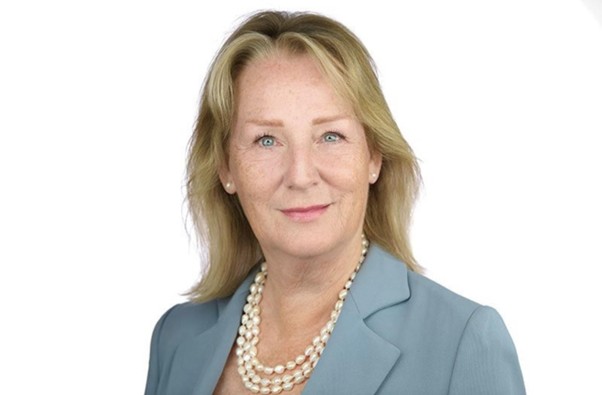
AUTHOR
By Professor Charlotte Valeur, Chair & Founder of ION Global
Charlotte is an investment banker, FTSE Chair, published author and professor in governance with a wealth of board experience across many industries and sectors.
A lifelong human rights advocate, Charlotte is driven to play her part in creating an inclusive society, advocating for equality and inclusion for all. To this effect she also founded the global Institute of Neurodiversity ION in 2020.